This week I finished the second half of “The Long Walk” section of The End of the World as We Know It, which includes Tananarive Due and Steven Barnes’ “The Boat Man,” Paul Tremblay’s “The Story I Tell Is the Story of Some of Us,” Usman T. Malik’s “The Mosque at the End of the World,” and Wayne Brady and Maurice Broaddus’ “Abagail’s Gethsemane.”
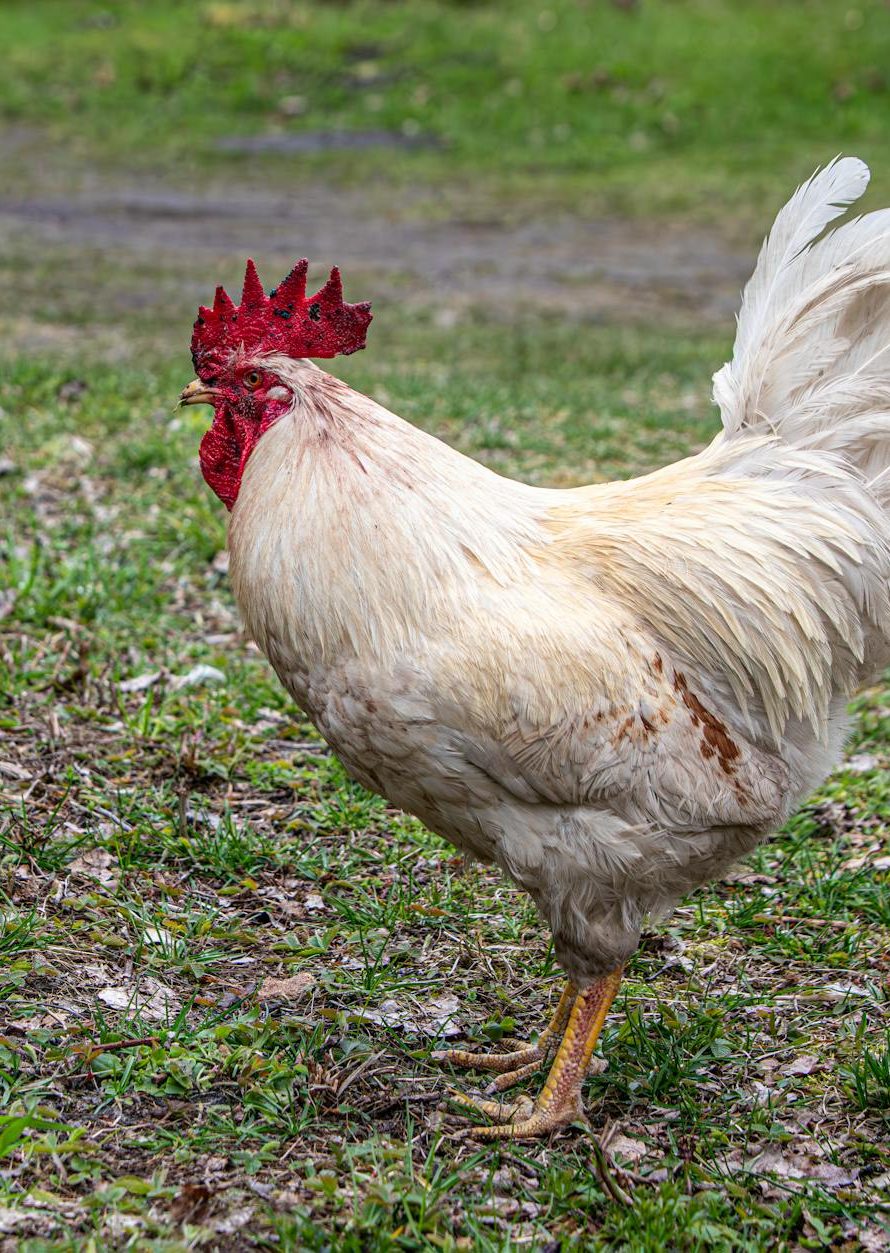
A resonant detail that struck me probably more that it ought to have in terms of narrative impact is the chickens. There are some really memorable chickens in “The Long Walk” section, first in Cynthia Pelayo’s “Milagros,” where the young protagonist travels with her pet chicken Choco and later in this section, in Due and Barnes’ “The Boat Man,” which starts in Key West, where “Although chickens had roamed free on streets and in yards for all of Marie’s life, and apparently since the first Cuban settlers a million years ago, they walked with more arrogance now […] Chickens strutted in a sea of brown and white, with bright red combs flapping, filling the streets as they darted between abandoned cars. They roamed houses with impunity, through perpetually open doorways, across sofas and kitchen counters” (473). In these two stories, it isn’t so much the presence of the chickens themselves that is particularly significant, but the fact that in this post-apocalyptic world, the girl in “Milagros” and Marie in “The Boat Man” don’t see the chickens first and foremost as a food source. For both of these young girls, the chickens are a reminder of the world that was, the way things used to be; in “Milagros,” Choco is the girl’s best friend and the only remaining connection to her home and family. This presents a stark contrast to the other animals these girls encounter, whether it is the crows Flagg sets on the young protagonist of “Milagros” or the human animals Marie encounters in “The Boat Man.” The chickens raise questions about what survivors fight to hang on to—whether literally, in the girl’s protection of and companionship with Choco in “Milagros” or the ways of life both familiar and new that they symbolize in “The Boat Man”—and how their interactions with the world around them must change if they want to survive.
My favorite story in this section (and current frontrunner for my favorite story in the collection as a whole, in a tie with C. Robert Cargill’s “Wrong Fucking Place, Wrong Fucking Time”) is Tremblay’s “The Story I Tell is the Story of Some of Us.” I have enjoyed every one of Tremblay’s novels and short story collections, though I have a particular fondness for his A Head Full of Ghosts (2015). “The Story I Tell is the Story of Some of Us” features characters from The Pallbearer’s Club (2022), Tremblay’s coming of age novel about Art Barbara and Mercy Brown. The novel is presented as Art’s account of their problematic friendship and its supernatural dangers, with Mercy’s annotations and responses interspersed throughout and written in the margins. “The Story I Tell is the Story of Some of Us” is a story that Mercy tells about Art and the end of the world, bringing her voice front and center as she carries on an unnerving conversation with a fellow survivor she meets on the road (we don’t get to hear what the fellow survivor says, though Mercy occasionally responds to them). Even though I haven’t read The Pallbearer’s Club since right after its initial release, Mercy’s cadences and personalities brought it almost immediately back into sharp relief and by a couple of paragraphs in I was thinking “wait, I know these people!” It jumps in in media res with Mercy’s abrupt “Hey, there. Hi. Whoa. It’s okay. I’m by myself. Didn’t mean to sneak up on you. I mean, fine, I did sneak up on you, but I didn’t mean to scare you” and her similarly unsettling confession that “I wasn’t following you. Well, I kinda was, but only for a day, maybe two. I was trying not to be a creep about it even when I watched you twitching in your sleep […] I can’t tell when I’m joking, either. I am a friend, not a foe. Probably” (501). The world and relationships of Tremblay’s The Pallbearer’s Club blur together with the world of King’s The Stand, blending familiar relationships with new roles and meanings, and the intersections and possibilities are fascinating. While this post-apocalyptic world isn’t one that many people take to naturally or with enthusiasm, it looks like Mercy is going to do just fine.
Brady and Broaddus’ “Abagail’s Gethsemane” is beautiful and haunting, providing a backstory by bookending Captain Tripps with Abagail’s experiences of nursing the sick during the 1919 flu epidemic, along with the horrifying reality of racial violence and the courage to stand against it. This reconsideration and explanation of Mother Abagail’s history offers a macrocosmic vision in which her and Flagg’s paths have crossed multiple times over the course of her long life, always in times of terror, violence, and abuses of power, and allowing readers the chance to imagine what her life might have been like to make her the leader she becomes in The Stand. Through this story, it becomes clear that standing against evil is not a once in a lifetime challenge, but a constant battle, a resonant and timely message.
From Abagail’s childhood to the connections with Tremblay’s larger body of work, the stories in this section invite us to imagine all the untold stories and to see the ways in which people and narratives are connected, creating expansive universes and endless possibilities. This limitless potential is at the heart of The End of the World as We Know It, reminding us that every single person has their own journey, their own history, their own dreams and nightmares, all of which can fundamentally shape the world around them.
[Page numbers are from the first edition of The End of the World as We Know It: New Tales of Stephen King’s The Stand, edited by Christopher Golden and Briane Keene (Gallery Books, 2025)].

 Exploring Stephen King's Maine