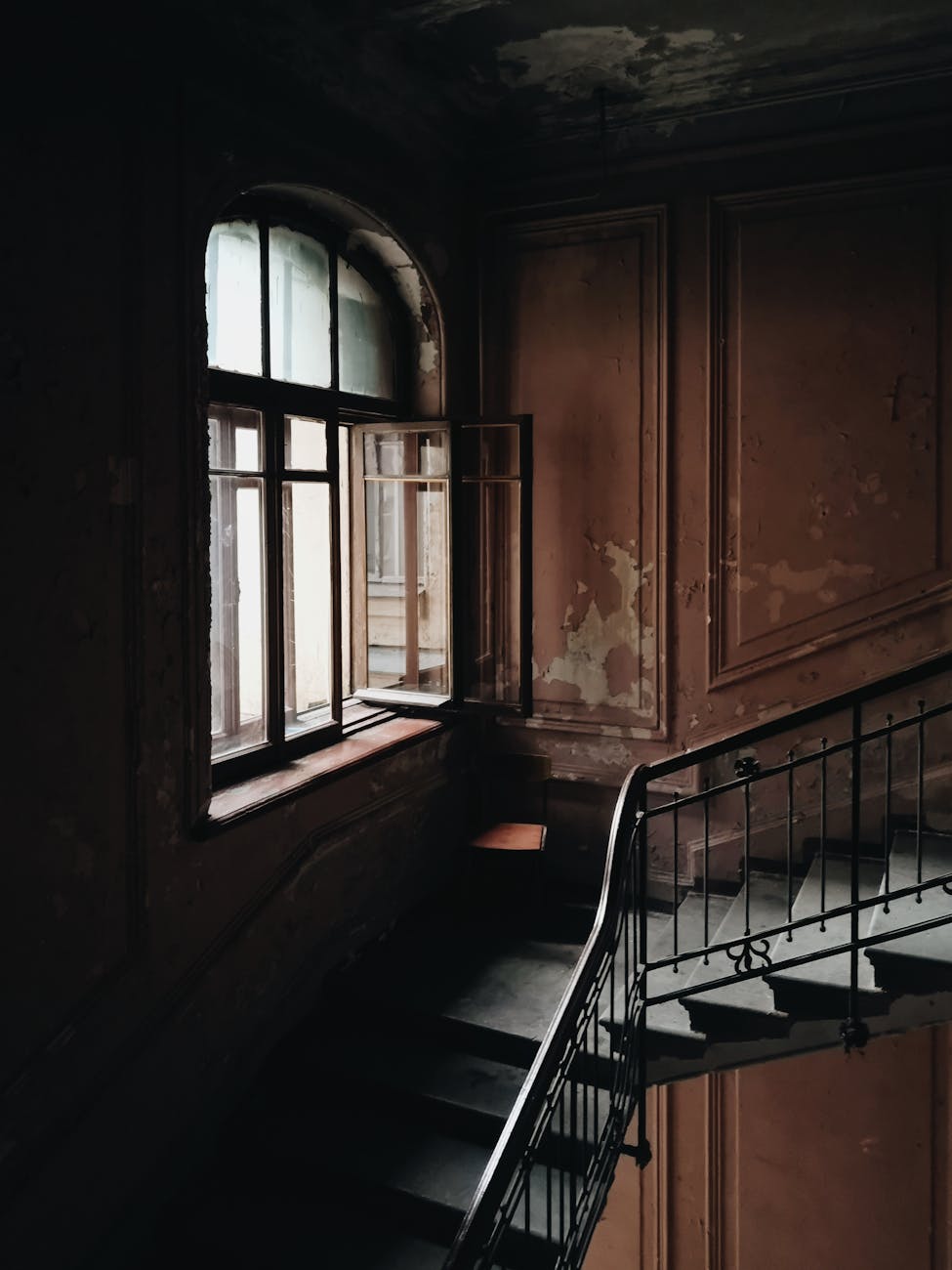
As I continue to process my Chapelwaite (Epix, 2021) viewing experience, I have found myself thinking even more about Chapelwaite the house (as opposed to Chapelwaite the series). Early in the series, I remember finding the house and its layout a bit overwhelming and disorienting, trying to figure out which doors led where, how the rooms connected with each other, and where the Boones and the events of their lives were situated within the larger context of its sprawling expanse—“a mansion,” as Honor (Jennifer Ens) calls it in the first episode, when the family arrives at their new home. And while as the series went on, familiarity made it easier to keep my bearings and draw these connections, the layout, architecture, and design of the house continues to draw my attention back to the halls of Chapelwaite.
The layout and architecture of houses in literature and popular culture—particularly in the Gothic tradition—carry great significance. The tunnels and passages in Horace Walpole’s The Castle of Otranto (1764) echo the family’s generational secrets and subterfuge, while the slightly-off angles of Shirley Jackson’s Hill House (The Haunting of Hill House, 1959) make the unsettling nature of the place and its history inseparable the structure itself. Christina Hardyment’s Novel Houses: Twenty Famous Fictional Dwellings takes this significance as its central premise, as she delves into “the extraordinary role that houses play—whether grand or small, unique or ordinary, real or imagined.” The significance of the house and what its walls conceal is also, of course, central to King’s “Jerusalem’s Lot” (in Night Shift, 1978), which inspired Chapelwaite, and H.P. Lovecraft’s “The Rats in the Walls” (1924), which inspired “Jerusalem’s Lot,” with both stories having hidden secrets and subterranean horrors.
Chapelwaite carries similar weight: a family home, it is invested with all of the history and trauma of the Boones, which is also visually echoed by the portrait gallery on the landing of the main staircase, a reminder that the departed Boones are never really gone, both in terms of the legacy of the family’s dark history and, for at least a few of them, in their undead and ever returning nature. The stairs themselves take the Boones (and their privileged visitors) further into Chapelwaite, ascending to the first landing before they must choose which way to continue, whether they want to turn to the left or the right. Both sets of stairs take them the same place (to the upper floor of Chapelwaite), but what seem to be fairly small and inconsequential choices often reverberate with grave consequences.
There are also the hidden nooks and crannies of the house, which further develop these themes of history, the connection between past and present, and choices. There are the tunnels that run behind the walls, including Charles Boone’s (Adrien Brody) study and part of the kitchen, and the walled-off parlor conceals its own predatory horrors. While these tunnels and hidden rooms create a sense of enclosure and secrecy within the house, it is incomplete and compromised. The existence of these tunnels also begs the question of who is served by this architectural design, which undermines Charles Boone’s family’s safety while allowing the vampires to move freely behind the walls of Chapelwaite, though these same tunnels also serve as a useful strategic asset for Charles as well. Despite this insularity and internalization, Chapelwaite can never be entirely safe or separate from the outside world, as Charles discovers in the tunnel between the house and the barn. These hidden places don’t even have to be physically or spatially internalized: in the second episode, “Memento Mori,” when Loa’s (Sirena Gulamgaus) bedroom door closes, we see Stephen Boone (Stephen McCarthy) standing silently in the corner, hidden in plain sight.
The dividers between these spaces also seem porous and unreliable. When Charles tells Rebecca Morgan (Emily Hampshire) in the first episode that the children will have a say in whether or not the family hires her, he ostensibly leaves them to have their own unsupervised conversation and retreats to his study, though he can clearly hear them and keeps an ear on how that interaction is going. The lock on the cellar door is less than reliable, echoing the ways in which the house’s dark history is impossible to truly shut away from the more optimistic future the Boone family hopes to create. Later, when the vampires attack Chapelwaite, the Boones and their allies set up barricades, though these prove unreliable as inside and outside, safety and danger, blur together.
The house of Chapelwaite is dark, beautiful, and complicated. Walking its halls and exploring its dark corners has been one of my favorite parts of watching Chapelwaite, and I have no doubt the house still holds plenty of secrets.
But for now, I think it’s about time we head back to Castle Rock.

 Exploring Stephen King's Maine